Israel is dismantling the court that charged Netanyahu. Six new judges are elected in December. They will decide whether he is ever arrested. Act now →

Defend the ICC

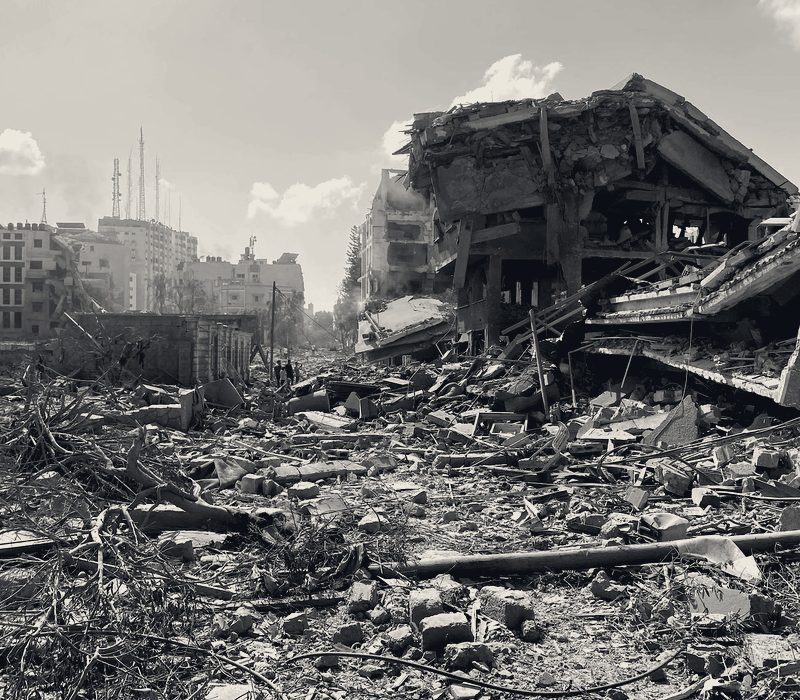
A destroyed residential street in the Rimal neighbourhood of Gaza City, buildings collapsed into rubble on both sides, following an Israeli airstrike in October 2023.
Rimal, Gaza City. Photograph: WAFA / APAimages, CC BY-SA 3.0

International Criminal Court · act before December 2026

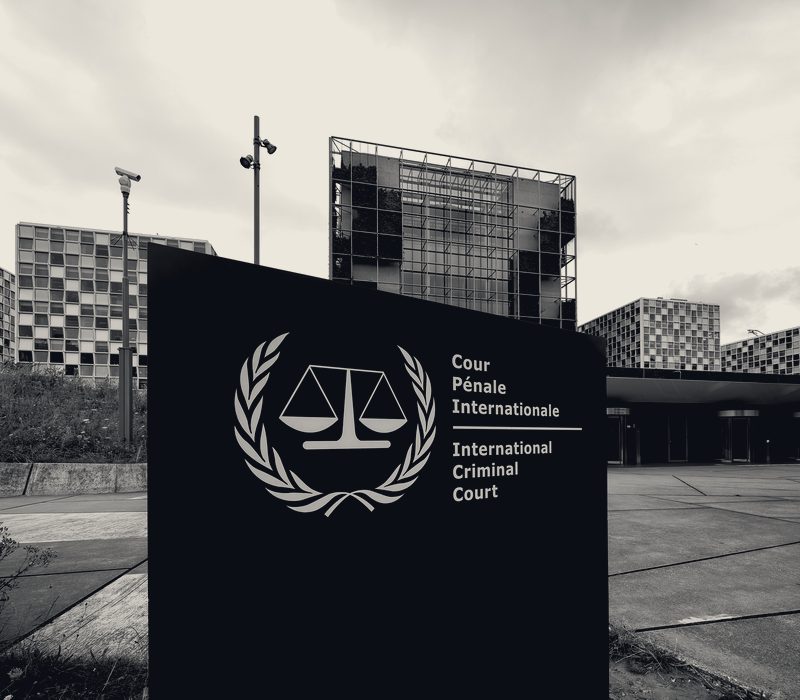
Israel is trying to break the court that issued a warrant for Netanyahu.

Tens of thousands of civilians have been killed in Gaza, among them children, doctors, and whole families buried under their own homes. In November 2024 the International Criminal Court did the one thing that could still carry consequences. It issued arrest warrants for Benjamin Netanyahu and Yoav Gallant for war crimes and crimes against humanity.

Israel has spent the two years since using American power to take that Court apart. Its judges have been sanctioned, its officials threatened, its chief prosecutor forced out. This December, six ICC judges are elected for nine years. The only thing that has ever protected this Court is the public deciding to watch.

Take action now

Two minutes · goes straight to the people casting and shaping the vote

Two minutes · do this first

Send your message before the vote

For two years the pressure has run one way. The Court’s judges have been sanctioned, its staff threatened, its prosecutor forced out. Every delegation voting in December has felt that weight, and almost none of them have felt anything pushing back. Judicial elections are unglamorous and almost never watched, which is exactly the quiet Israel is counting on.

Every state party to the Rome Statute is legally obliged to execute the arrest warrants. Whether that obligation survives is what December decides.

Your message goes to the Assembly of States Parties, to the UN missions casting the votes, and to the Coalition for the International Criminal Court. Positions harden in December, and the judges chosen then sit until 2036.

Now put it in front of someone else.

This vote stays unobserved unless people make it otherwise. One share reaches the people your message never will.

What your message demands

  1. Elect judges who will apply the Rome Statute impartially and resist political interference from any government, including the United States and Israel.
  2. Affirm publicly that the Netanyahu and Gallant warrants remain valid and binding on all 125 states parties, and must be enforced.
  3. Reject any candidate who questions the Court’s jurisdiction over the officials of allied states.
  4. Condemn the sanctions imposed on judges and prosecutors for their judicial work, and protect Court personnel and their families.
  5. Guarantee the Palestine investigation continues under the incoming Prosecutor.

What the warrants are for

This is what the charges describe

The Court had never before charged the leadership of a Western-allied state. Pre-Trial Chamber I did it unanimously, and rejected Israel’s challenge to its jurisdiction unanimously as well.

War crimes

  • Starvation of civilians as a method of warfare
  • Intentionally directing attacks against a civilian population

Crimes against humanity

  • Murder
  • Persecution
  • Other inhumane acts

Accused

  • Benjamin Netanyahu, Prime Minister of Israel
  • Yoav Gallant, former Minister of Defense

Conduct from 8 October 2023 until at least 20 May 2024.1

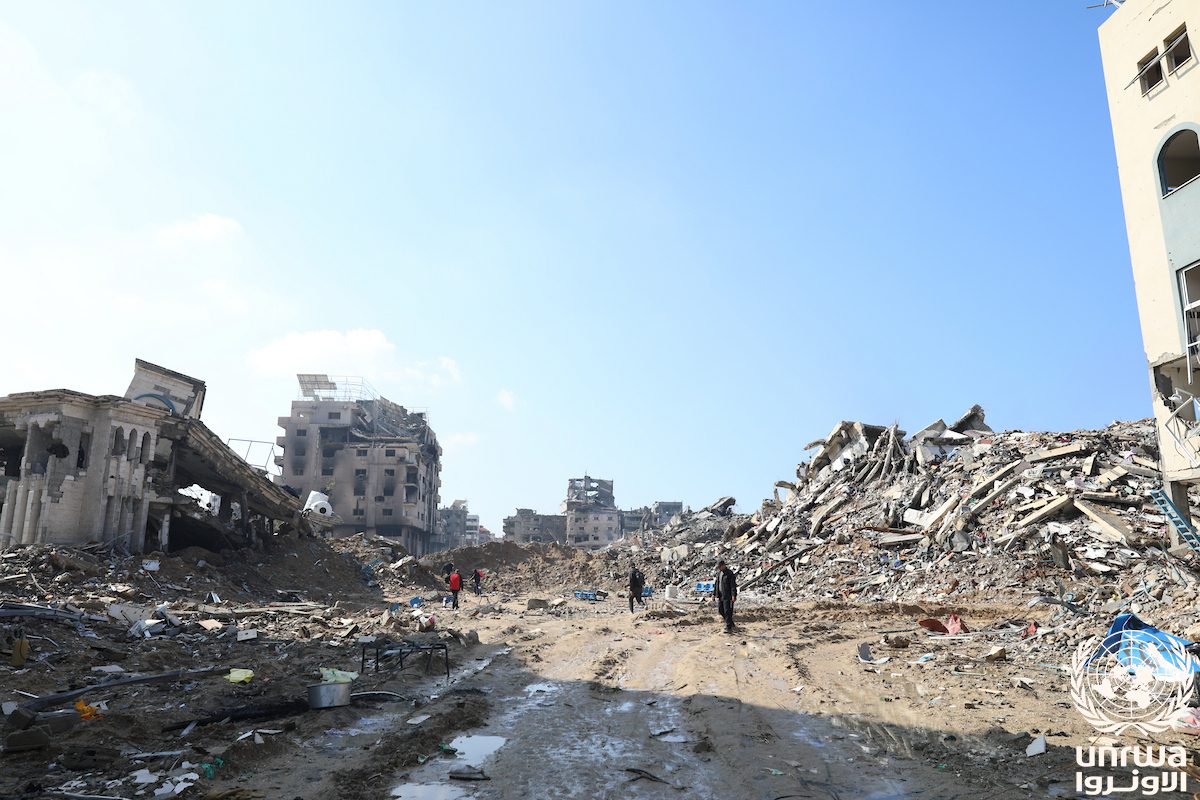
Rows of destroyed multi-storey residential buildings in the Al-Maqousi quarter of the Gaza Strip, February 2024.
Al-Maqousi quarter, February 2024. Abedallah Alhaj / UNRWA, CC BY-SA 3.0 IGO
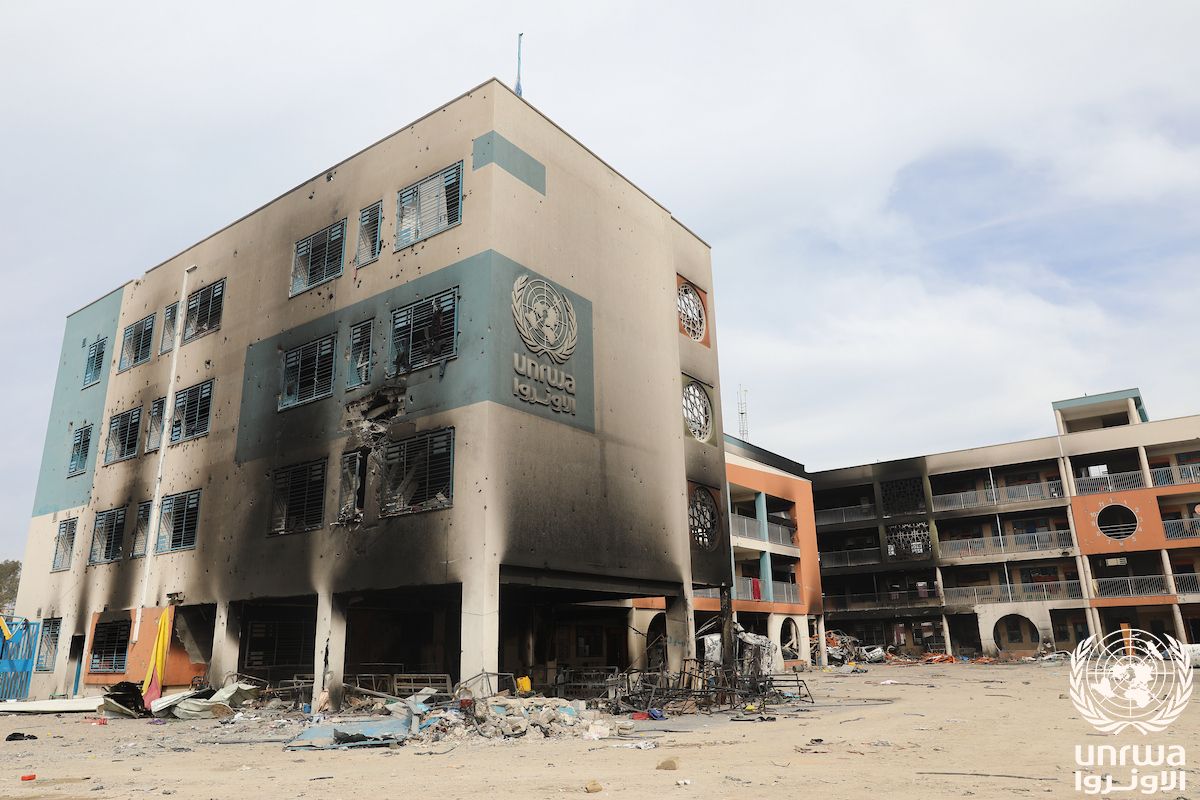
The burnt-out shell of the UNRWA Remal Co-ed School in the Gaza Strip, its classrooms gutted and blackened, February 2024.
UNRWA Remal Co-ed School, February 2024. Abedallah Alhaj / UNRWA, CC BY-SA 3.0 IGO

Said out loud

The admission

Efforts to bring the International Criminal Court “to heel” were intended to “defend Bibi and various other people.”

Donald J. Trump, President of the United States, describing his administration’s campaign against the Court

Pressure on international courts is normally deniable. It runs through funding, access and quiet diplomacy, and it is always called something else. Not this time. The stated purpose of an American sanctions programme was the protection of one indicted foreign leader. There is no reading of that sentence in which the Court’s independence is not the target.

The takedown

Four steps, two years

Israel has not needed to abolish the Court. It has only needed to make the personal cost of doing the job unbearable for the people who hold the offices, and it has used American power to do it.

  1. The Court charges Netanyahu and Gallant

    Judges unanimously reject Israel’s jurisdictional challenges and issue arrest warrants for war crimes and crimes against humanity. It was the first time the ICC had charged the leadership of a Western-allied state.

    International Criminal Court

  2. Washington sanctions the judges

    Executive Order 14203 puts the Court under US sanctions. Later rounds name sitting judges and deputy prosecutors personally. Their bank accounts were frozen, their cards cancelled, and they were locked out of the global financial system. Judges were punished for the content of their rulings, in defence of a foreign prime minister, and Washington said so openly.

    Executive Order 14203 · ICC statement

  3. The prosecutor who signed the warrants is removed

    In March a three-judge panel concludes unanimously that the findings against Prosecutor Karim Khan do not establish misconduct or breach of duty. In April a majority of the Assembly’s Bureau votes to disregard that conclusion. In July, states parties remove him by secret ballot, eleven days after the US Secretary of State said Washington would “dismantle the ICC — brick by brick, if necessary.”

    Middle East Eye · BBC News

  4. And now they choose a third of the bench

    Six judges, nine-year terms to 2036, elected by the same states that have spent two years deciding how much American pressure they are willing to absorb. This is the step that is not finished. It is the only one still open to us.

    Assembly of States Parties, 2026 judicial elections

The precedent

There is no second court

The strength of the international human rights and justice systems depends precisely on their universality — on the principle that they apply equally, or to no one.

International Network of Civil Liberties Organizations, joined by the ACLU, CELS, Dejusticia, ICCL, KHRC and others, July 20265

01

Every past prosecution is reframed

If the Court reaches only the weak, its record stops reading as justice and starts reading as selection. Every defendant it ever convicted acquires, free of charge, the defence they always claimed: that they were prosecuted because they could be.
02

The silence is the precedent

Sanctions from a non-member state are an attack from outside. Member states declining to say plainly that these warrants bind them is worse: it establishes that Rome Statute obligations are negotiable when the accused is well-connected. That is then available to everyone.

03

The UN loses its whole argument

The system asks states to accept binding constraints in exchange for an order that applies to everyone. If its most visible test resolves in favour of power, the UN loses more than a case. It loses the argument, and it loses it to everyone who always said the rules were written by the strong for use against the weak.

04

There is no replacement waiting

The ICC is the only permanent court with jurisdiction to try a sitting head of government for these crimes. No higher body hears an appeal from it, and no successor institution is being built. If it is broken here, it stays broken for the next Gaza, and the one after that.

Israel does not need the Court abolished. It needs December’s vote to pass quietly: six judges chosen with nobody watching.

So be someone who was watching.

Two minutes to send. Ten seconds to pass on.

Take action

Built with Words of Justice

This campaign runs on people, not budgets.

This site and the campaign behind it were built with Words of Justice, a platform that turns public attention into pressure that actually arrives: letters, messages and calls that land on the desks that matter. Campaigns cost money to run. The tooling, the hosting, the research, and the people who keep it moving. If this page mattered to you, help us keep it, and the next one, alive.

Take the campaigns with you